
Opinion
The Battle Over Credit Card Swipe Fee Caps: Why Small Business Owners Oppose 'Well-Intentioned' Regulation
Multiple U.S. states and Congress are pushing to cap credit card swipe fees, claiming it benefits small businesses. However, the owners of three beauty salons in Wisconsin and Jessica Ward, senior director of state affairs at the National Taxpayers Union, argue in an article that such policies actually shift costs and harm community banks and small businesses.

Payment Modernization Cannot Wait: The Urgency of Digital Transformation in Healthcare
Although digital payment adoption is rapid, critical sectors like healthcare remain trapped in manual and paper-based workflows, with estimated annual losses reaching $18.4 billion. A recent White House executive order requiring federal payment modernization signals a cross-industry transformation. The healthcare case shows that administrative burdens continue to rise, and automated payments can significantly reduce costs and improve efficiency, but require strategic collaboration and platform support.

Don't make American consumers pay for financial data sharing
The U.S. Consumer Financial Protection Bureau (CFPB) under new leadership is attempting to repeal Rule 1033, which gives consumers control over their financial data. Repealing it would harm consumer interests, hinder innovation, and reduce competition in banking. The successful implementation of open banking models in the UK and Australia demonstrates that secure data sharing can promote competition and credit accessibility.
The GENIUS Act Is Only the Starting Point for Stablecoin Regulation
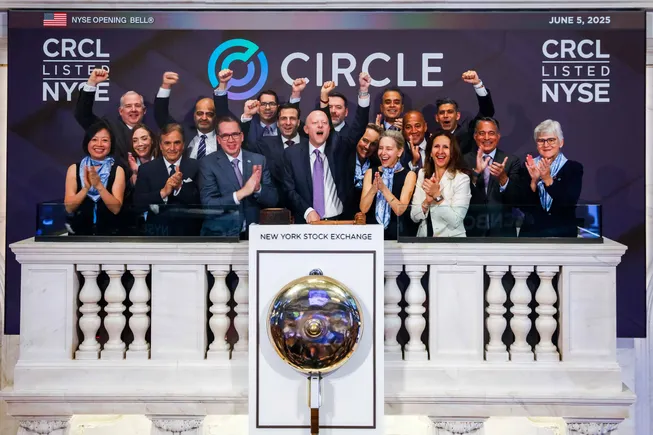
Ryan Peters, assistant professor at Tulane University's business school, believes that the U.S. GENIUS Act is a milestone in stablecoin regulation, but far from the end. The bill addresses the definition of stablecoins and regulatory attribution, mandates cash or short-term Treasury reserves, and ends the jurisdictional dispute between the Federal Reserve and the SEC. However, the bill does not require daily reserve transparency, nor does it address bank deposit outflows. The author calls on Congress to quickly introduce follow-up measures, including daily disclosure of reserve details, establishing outcome-based innovation channels, and setting up liquidity adjustment mechanisms.

Protect Earned Wage Access Now: Don't Turn Back the Regulatory Clock
Over the past six years, EWA has helped American workers manage daily finances and cope with emergency expenses. The 2020 advisory opinion clarified its non-credit nature, but the 2024 proposed rule and 2025 rescission created confusion. The author urges the CFPB to issue an expanded advisory opinion to confirm once and for all that EWA is not credit.

Farewell to Paper Checks: What the Federal Digital Payment Shift Signals
Earlier this year, the White House issued a directive requiring federal agencies to stop using paper checks as the default method for payments and collections by the end of September. This move is seen by industry insiders as a correction to a long-standing inefficient payment method. Chase Gilbert, CEO of Built Technologies, notes that paper checks are 16 times more likely to be lost or stolen compared to digital payments, and cost taxpayers hundreds of millions of dollars annually. Despite the clear evidence, 75% of businesses still rely on paper checks for B2B payments. Gilbert calls on the private sector to elevate payment digitization as a strategic priority to enhance security, transparency, and operational efficiency.

Banks Urged to Accelerate ISO 20022 Compliance Preparation
The ISO 20022 standard aims to unify the data exchange format among global financial institutions, and the implementation deadline for the Fedwire payment system has been extended to July 2025. While large banks have made significant progress, small and mid-sized banks and credit unions generally lag behind. Industry research shows that only 5% of financial leaders are confident in their current real-time payment processing capabilities. Experts suggest that institutions should leverage this compliance opportunity to drive system modernization, thereby enhancing operational efficiency, strengthening anti-fraud capabilities, and gaining a competitive advantage.

Gen Z Reshapes B2B Payments: From Transaction Tools to Value Statements
As Gen Z enters the workforce, they are reshaping B2B payments as digital natives: they demand instant settlement, transparent fees, flexible credit, and value alignment. Billtrust CEO Sunil Rajasekar believes that payments are no longer mere transactions but a litmus test of corporate values. Companies that cling to 30-day payment terms and cumbersome approvals will lose the trust of this generation of decision-makers.

How Stablecoins Extend Dollar Hegemony: The New Journey of the Digital Dollar
The dollar has served as the world's reserve currency for over a century and is now undergoing digital transformation through stablecoins. With a value exceeding $200 billion, stablecoins offer a store of value for residents of high-inflation countries, reduce cross-border transfer costs, and promote financial inclusion. Although Bitcoin's volatility limits its payment functionality, dollar-pegged stablecoins (such as USDT and USDC) are rapidly gaining traction in regions like Latin America and sub-Saharan Africa, serving as a powerful complement to traditional fiat systems.

Payment Tools Surge, Industry Consolidation Imminent
The payment industry is repeating the streaming playbook: an explosion of options that leaves consumers more confused. From digital wallets to BNPL, from direct bank connections to cryptocurrencies, fragmentation is intensifying. But history shows consolidation is inevitable—the winners will be those companies that make payments invisible.