
Fintech Companies in the Trump Era May Steal the Spotlight from Banks
With Trump back in office, payment fintech companies are expected to gain more regulatory space, including special-purpose national bank licenses and a federal framework for stablecoins. However, traditional financial institutions such as banks may come under pressure as a result. This article summarizes the views of industry lawyers, former officials, and recent policy developments.
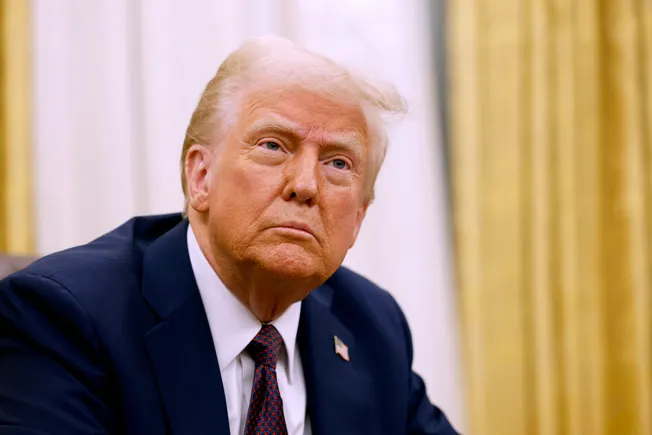
President Donald Trump's return to the White House this year could mean opportunities and changes for the rapidly evolving payments industry.
Payments fintech companies that have flourished over the past decade have been actively lobbying for more regulatory leniency to offer more services and reduce government friction. Lawyers familiar with the industry say the Trump administration is likely to meet their demands, but that doesn't mean the new era will be without turbulence and uncertainty.
Fintech companies have long aspired to gain more trust from the federal government, seeking some of the same privileges as U.S. banks and credit unions.
National bank charter prospects
Given that the Trump administration is expected to be more friendly to business interests and innovation, non-bank payment players may finally see a path to push the Treasury to establish a special-purpose national bank charter, allowing fintech companies to operate in certain areas without a bank charter or partner, said David Sewell, a partner at Freshfields.
This demand has spanned Republican and Democratic presidencies, with multiple attempts to introduce it through the Office of the Comptroller of the Currency (OCC) despite opposition from states. Sewell, who leads Freshfields' U.S. financial services regulatory practice, explained that a similar industrial loan company charter from the Federal Deposit Insurance Corporation (FDIC) also failed to gain traction. Currently, payment players and fintech companies typically must obtain licenses in all 50 states one by one to offer services nationwide, he said in an interview this month.
Such a special-purpose national charter could allow companies to build a nationwide payment system without obtaining money transmitter licenses in every state. For example, Trump's billionaire donor Elon Musk has been seeking state licenses to create payment tools on his social media platform X, although a new partnership with Visa's real-time payments network announced by Tuesday might solve the problem.
"If we believe the Trump administration's promises, and I see no reason not to... I think some new charter option must be on the agenda," Sewell said.
Trump's nominee for Treasury Secretary, Scott Bessent, was confirmed on Monday, but he has not yet taken a position on the prospects for such a special bank charter.
Stablecoins rise on Trump's coattails
In digital assets, the Trump administration has issued an executive order emphasizing the promotion of digital financial technology innovation. The January 23 directive supports increased use of stablecoins—a type of cryptocurrency pegged to the value of fixed assets like the U.S. dollar.
As a result, stablecoins could gain more importance in the economy, including potentially as a form of payment. This is also an area where the federal government has an opportunity to overcome the dominance of some states like New York in stablecoin regulation, said Anand Sithian, a partner at Crowell & Moring.
Republican majorities in both the Senate and House could help Trump's stablecoin agenda. This could mean stablecoins will also gain some new form of charter, Sithian said. "What I see is that Congress really needs to step in and provide a federal regulatory framework," he said in an interview this month.
Meanwhile, Trump's order echoes congressional efforts to move away from central bank digital currency issuance.
How Congress will handle the proposed Credit Card Competition Act, if reintroduced, remains to be seen. Although the main sponsor of the bill was then-Democratic Senate Majority Whip Dick Durbin, last year a few co-sponsors included then-Republican Senator J.D. Vance, who is now Trump's vice president. The bill aims to break Visa and Mastercard's dominance in charging merchants fees and gained Republican support during a Senate Judiciary hearing last year.
How Trump will shape CFPB payments policy
In terms of the Consumer Financial Protection Bureau's (CFPB) oversight of payment companies, the Biden administration under Director Rohit Chopra has been aggressive. The agency has issued rules attempting to set parameters for emerging payment tools like buy now, pay later and earned wage access services. Some of these rules, including an interpretive rule related to BNPL and a rule overseeing digital wallets of large tech companies, have been challenged in court.
Although Chopra temporarily remains head of the agency, he is expected to leave soon given Trump's power to appoint a new director. Nevertheless, the agency's staff has been active recently, seemingly preparing for the upcoming transition to the Trump administration.
In the past month, the agency sued Early Warning Services, accusing it of allowing fraud to "fester" on the Zelle system; rescinded an earned wage access advisory opinion issued during the first Trump administration; and urged states to strengthen oversight of consumer issues.
In fact, many states have been actively trying to enact new regulations for BNPL and EWA, although state positions are often inconsistent. They also have different approaches to emerging payments legislation, such as whether to allow credit card issuers and networks to charge interchange fees on taxes and tips.
David Silberman, former CFPB Acting Deputy Director (now a visiting lecturer at Yale Law School), noted that the mission statement of the first Trump administration suggests the new government may encourage financial company growth.
"Under the Trump administration, the CFPB may have a strong free-market orientation and will seek to ensure consumers can make their own decisions, whereas under Director Chopra, there was more emphasis on rulemaking to prohibit practices deemed unfair or abusive," Silberman said in an interview this week.
Any CFPB rules could be rescinded, Silberman noted. The Congressional Review Act gives Trump and his Republican allies in Congress the opportunity to overturn regulations.
Banks may suffer, payments tech benefits
Regardless of how specific CFPB issues develop, industry professionals expect the new regulatory environment to support innovation and expansion by fintech and payments tech companies. And this could come at the expense of banks.
The Trump administration may pave the way for new entrants to challenge existing financial institutions, especially given the president's sometimes tough stance toward large banks and their CEOs. Although he has clashed with Jamie Dimon, CEO of JPMorgan Chase, the largest U.S. bank, Trump has recently embraced tech figures, inviting Amazon founder Jeff Bezos and Apple CEO Tim Cook to his inauguration festivities this month.
"You will see innovators and new market entrants currently in a more favorable position than traditional players," Sewell said. "Don't forget, President Trump and many around him don't like big banks at all."
Even so, investors expect that with the Trump administration reducing aggressive antitrust enforcement, Capital One's proposed acquisition of Discover Financial Services will be approved. Shares of both companies rose after Trump's election. The $35 billion deal, proposed in February 2024, is still under review by the Department of Justice.
Another pending DOJ action is the antitrust lawsuit filed against Visa last year. The San Francisco-based card network may hope a more friendly Trump administration will reconsider the case, which alleges monopolistic behavior in the debit card market, although fintech companies (including big tech firms) could arguably be beneficiaries of the DOJ action.
Visa CEO Ryan McInerney has vowed to fight the case. And as of this week, Visa has ties to Trump ally Musk, with his X social media platform partnering with the card giant to support the launch of a new digital wallet.
Correction: This article has been updated to correct David Silberman's former position at the CFPB.