
Can Cryptocurrency Disrupt the Payment Landscape?
In 2022, the cryptocurrency industry laid off over 26,000 people, and the wave of layoffs continued into early 2023, but Binance expanded its hiring against the trend. Bitcoin's price rebounded above $23,000 in January, and Goldman Sachs listed it as the best-performing asset of 2023. Bank institutions have divergent attitudes: Bank of America is preparing for a mild recession, JPMorgan Chase's CEO remains skeptical, while BNY Mellon persists in developing digital assets. On the regulatory front, the Federal Reserve and other agencies issued a joint warning, the New York State Department of Financial Services requires banks to obtain prior approval for crypto activities, and SEC and CFTC commissioners call for rule-making. The FTX bankruptcy hearing continues until April, and Bankman-Fried is set to stand trial in October.
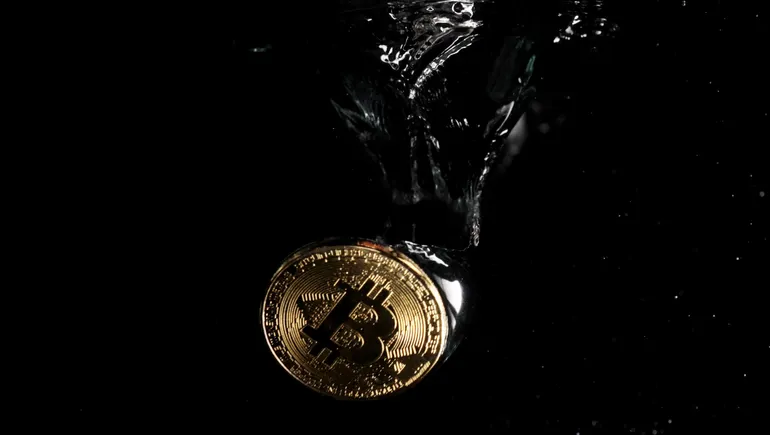
Since early May, the wave of layoffs in the cryptocurrency sector has continued to spread. In 2022, the industry lost more than 26,000 jobs cumulatively; as of the time of this writing, the total number of layoffs in 2023 has been no less than 1,900. Despite the calendar turning over, the industry has not seen a 'new year, new beginnings' turnaround.
It is difficult to predict when the layoff trend will subside, but Binance is an exception. After hiring 5,000 employees last year, its CEO Changpeng Zhao said at a Swiss cryptocurrency financial conference on January 11 that he hopes to expand Binance's workforce by 15% to 30% this year.
"We will continue to build and hope to accelerate expansion again before the next bull run arrives," Zhao said.
The bull market may still be some time away. According to Forbes, on average, crypto winters last four years. Given that Bitcoin's mysterious inventor Satoshi Nakamoto released the asset only 14 years ago, four years is not short. The previous crypto winter lasted from the end of 2017 to the end of 2020, spanning three years, after which prices surged to all-time highs in November 2021.
In traditional securities, a bear market typically refers to a 20% decline in market indices. Although there is no official definition of a crypto winter, 2022 was undoubtedly bone-chilling. In May, one of the most well-known stablecoins depegged from the dollar, triggering market turmoil. Throughout the year, several major exchanges—Celsius, Voyager Digital, FTX, and BlockFi—collapsed one after another. Bitcoin's price fell by as much as 77% (at least temporarily).
However, in recent weeks, Bitcoin has seen a modest rebound. As of January 25, its price climbed above $23,000 for the first time since August last year.
Bradley Duke, co-CEO of ETC Group, said this month that Bitcoin's rise was mainly driven by 'waning macro concerns,' including falling U.S. inflation data and strong job growth.
Indeed, the Consumer Price Index recorded its largest drop since the early days of the COVID-19 pandemic. However, bank CEOs still hold on to their recession forecasts from last autumn. Brian Moynihan, CEO of Bank of America, told investors on January 13 that he is preparing for a 'mild recession,' and the bank has implemented some hiring freezes.
Goldman Sachs Enters the Scene
Meanwhile, on January 23, Goldman Sachs listed Bitcoin as the best-performing asset of 2023, with a total return of 27% and a risk-adjusted ratio of 3:1. In December last year, it was reported that after FTX's collapse, the bank planned to spend tens of millions of dollars to purchase or invest in cryptocurrency companies.
Mathew McDermott, Goldman Sachs' head of digital assets, told Reuters that FTX's collapse 'highlighted the need for more credible, regulated cryptocurrency participants, and large banks see an opportunity to take on business.'
Goldman Sachs CEO David Solomon expressed a similar view in a Wall Street Journal column last December, at least regarding the technology driving cryptocurrencies. He said the benefit of having regulated financial institutions develop blockchain applications is that they 'are accustomed to high standards of regulatory oversight... and can work with regulators and policymakers to find the right balance between regulation and innovation.'
Solomon wrote that FTX's downfall and its ripple effects 'should not distract us from the opportunities at hand,' and that 'investors, large and small, can benefit from blockchain innovation led by established, experienced institutions.'
Other Supporters?
Is Solomon's support enough to keep other banks interested in cryptocurrency after the challenges of the past year? Jamie Dimon, CEO of JPMorgan Chase, is not convinced—but he never has been (though the bank does own a cryptocurrency wallet trademark).
Metropolitan Community Bank announced this month that it is exiting the cryptocurrency space; and Signature Bank, once crypto-friendly, is planning to divest $8 billion to $10 billion in digital assets to significantly reduce its crypto portfolio.
Michael Hsu, Acting Comptroller of the Currency, told Bloomberg last December that as token values plummeted, most banks' curiosity about cryptocurrency 'evaporated' in 2022, and he would be 'shocked' if any bank expressed interest in the asset class now.
However, Robin Vince, CEO of BNY Mellon, said on this month's earnings call that since launching its cryptocurrency custody service last October, digital assets have been and will continue to be a focus for the bank.
In a Financial Times column last December, Vince emphasized the importance of establishing a regulatory framework for digital assets like cryptocurrency, noting that 'many of the foundations already exist and can be extended from traditional asset regulation.'
'We should embrace digital asset innovation and combine it with established rules and prudent regulatory principles to protect customers and promote resilience,' Vince wrote. 'In doing so, we also protect our most valuable asset—confidence in our financial system.'
Regulatory Outlook
Cryptocurrency regulation was already a hot topic before FTX's collapse. Sam Bankman-Fried, founder of the now-bankrupt exchange, testified before Congress in 2021 and later tweeted that he was 'excited' to work with authorities to refine the regulatory environment. Although any legislative proposals associated with him are now almost certainly stalled, lawmakers and consumers are calling for cryptocurrency regulation louder than ever.
Recently, regulators have provided extensive guidance, though no specific plans. Last December, the Federal Reserve, the Office of the Comptroller of the Currency, and the Federal Deposit Insurance Corporation issued a joint warning about risks associated with banks and crypto. The Basel Committee on Banking Supervision also published guidance for banks venturing into digital assets during the same period. The New York State Department of Financial Services also announced in December that any bank it regulates must obtain prior approval before engaging in crypto-related activities, and banks already engaged in such activities must contact regulators immediately.
Adrienne Harris, Superintendent of the New York State Department of Financial Services, said the new guidance is 'critical to ensuring that consumers' hard-earned money is protected, that New York-regulated banking organizations remain resilient and competitive, and to clarifying expectations for those who wish to submit proposals involving virtual currency-related activities.'
However, regulators remain divided over who should lead cryptocurrency regulation, which may have slowed progress. Last week, Hester Peirce, a commissioner at the U.S. Securities and Exchange Commission, said the SEC should regulate digital assets like cryptocurrency through rulemaking.
'If we continue with 'regulation by enforcement' at the current pace, it would take about 400 years to process all the tokens that are allegedly securities,' she said at a conference at Duke University on January 20, as reported by Pensions & Investments. 'In contrast, once SEC rules take effect, they have universal (though non-retroactive) coverage.'
Also at Duke University, Kristin Johnson, a commissioner at the Commodity Futures Trading Commission, urged Congress to include in any new legislation 'statutory authority granting the CFTC the power to conduct effective due diligence on companies, including crypto firms, that wish to acquire CFTC-regulated entities.'
Whatever happens in 2023, the fallout from last year will be processed gradually. Bankruptcy hearings for the FTX case are scheduled through April. Claims against Celsius (which just received court approval for partial customer withdrawals and has subsequent hearing dates) must be filed by February 9.
The fraud lawsuit filed by New York Attorney General Letitia James against former Celsius CEO Alex Mashinsky will also continue to move forward.
Additionally, unless a plea deal is reached, Bankman-Fried will stand trial in federal court in October on charges including wire fraud and conspiracy to commit money laundering. Former FTX executives Caroline Ellison, Gary Wang, and Nishad Singh are all cooperating with authorities in their investigation of Bankman-Fried. Bankman-Fried has pleaded not guilty to all eight charges.