
US 'Payment Choice Act' Gains Bipartisan Support: Battle Over Cash Payment Rights Heats Up
The Payment Choice Act, pushed by US Congressman Donald Payne Jr., aims to protect consumers' right to pay with cash and has gained bipartisan support. The bill comes against the backdrop of declining cash usage, the rapid proliferation of digital payment tools, and the Federal Reserve's exploration of central bank digital currencies (CBDCs). This article reviews the current state of cash usage in the US, the impact of the COVID-19 pandemic on payment habits, legislative developments in cities banning cashless stores, and global CBDC research progress, while analyzing the potential effects of payment system changes on banks, fintech companies, and consumers.
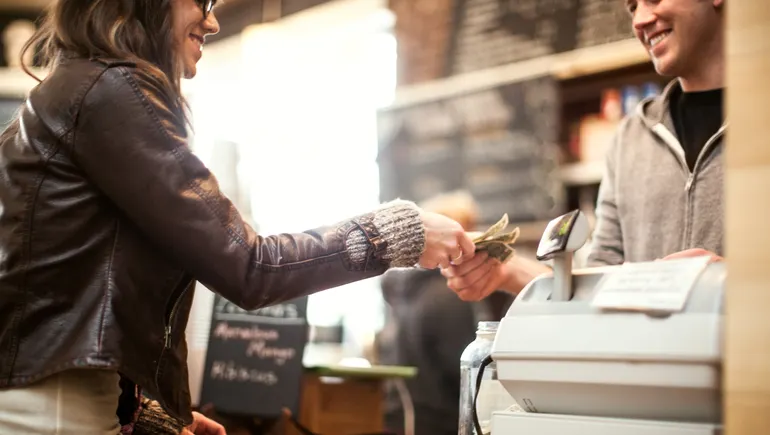
While the Federal Reserve Board is considering issuing a digital dollar, U.S. Representative Donald Payne Jr. remains focused on cash. Deeply concerned about some stores refusing to accept cash, he introduced the Payment Choice Act to protect Americans' right to pay with cash and prohibit merchants from refusing it. Payne first introduced the bill in 2019 and reintroduced it in July this year.
"There is an attack on American currency right now," Payne said in an interview this month. "It looks like a move toward a cashless society, but this trend actually hinders many Americans from buying necessities like food and medicine."
Payne, a Democrat from New Jersey, noted that about 55 million Americans lack bank accounts or credit cards, many of whom are minorities, the elderly, and people with disabilities. He expressed concern about their purchasing power. "We cannot ignore their needs just because they don't have credit cards or Apple Pay," he said. "I think it's crucial to defend these people's rights."

The saying "cash is king" is now fading. Digital tools such as contactless credit cards and mobile apps are further weakening the dominance of paper currency globally, and cryptocurrencies have also become attractive investment options. Digital payment methods marketed as faster, cheaper, and more convenient—now including central bank digital currencies—are prompting governments, businesses, and consumers to consider replacing traditional paper money.
This trend is especially evident in Washington, D.C., where discussions around central bank digital currencies are becoming increasingly complex. Federal Reserve Chair Jerome Powell promised to release a "white paper" to kick off discussions on a U.S. digital dollar, but the report is months overdue, and his colleagues on the board are divided. Meanwhile, competitive pressure from China's "digital yuan" launched earlier this year has also cast a shadow over the issue.
As Payne's concerns about cash collide with the technological pressures on Powell, the future dialogue over the U.S. payment system could become more contentious. For established financial institutions like banks, a disruption of the current payment system would mean huge losses; for fintech companies backed by venture capital trying to drive industry change, the stakes are equally high.
Current state of the U.S. payment system
Since 2016, cash usage in the United States has been declining, and this trend is expected to continue, with the only exception being a rebound this year and possibly extending into next year, driven by the reopening of the U.S. economy after the deadly COVID-19 pandemic.
According to a report by consulting firm McKinsey, U.S. consumer cash spending fell by an average of 5% per year from 2016 to 2019, and last year it plummeted by about 24% as the pandemic reduced overall spending and boosted contactless payment methods. The firm predicts that cash spending will decline at an annual rate of 6% by 2025 as digital wallets with embedded credit cards, prepaid debit cards, and other electronic payment methods such as automated clearing house (ACH) transfers continue to gain popularity.
In terms of generational preferences, a Federal Reserve report on cash released in May shows that in the U.S., cash usage has been higher among younger people aged 18 to 24 and those over 55. Those in the middle age range (25 to 54) tend to use less cash. However, last year saw a major shift—the youngest group began moving away from cash, which may indicate they accelerated adoption of digital payments during the pandemic.
Philip Bruno, co-leader of McKinsey's global payments practice, said affluent Americans are more inclined to use electronic payment methods, with cash accounting for less than 10% of their transactions. Meanwhile, cash spending among low-income and unbanked populations still accounts for about 40% of their total consumption. He explained that this is a key reason cash persists in the United States.
While lower-income segments of the U.S. population were increasing their use of cash in recent years, or persisting in their use of it, the more affluent segments have been cutting their cash use.

This aligns with Federal Reserve data showing that cash is mainly used for small payments under $25 and in-person transactions. But after reports that the coronavirus could spread through contact with contaminated surfaces, including currency, the share of cash used in in-person transactions reportedly dropped sharply from 35% to 28%. This remained the case even though later that year reports found limited cases of virus transmission via surfaces.
Impact of the COVID-19 pandemic on cash usage
"While fewer consumers made in-person payments during the pandemic, those who did were more likely to encounter merchants asking them not to use cash," the Federal Reserve report noted. "About 45% of people who shopped in person said merchants encouraged consumers to avoid cash at least some of the time."
Perhaps more importantly, when consumers stayed home to avoid the virus, they turned to online shopping. This e-commerce boom relied almost entirely on non-cash payments.
According to a Federal Reserve survey, during the pandemic, consumers increased the amount of cash and coins they kept in wallets, homes, and cars, and it remained high at least until April this year. As consumers hoarded cash and coins, some merchants experienced cash shortages, such as laundromats lacking quarters. All these factors prompted the U.S. Treasury to put more currency into circulation.
Although small merchants like neighborhood barbershops or bookstores have for years encouraged customers to pay with cash to avoid fees charged by credit card companies like Visa and Mastercard and other intermediaries, the contagious nature of the pandemic prompted many businesses to shift entirely to contactless payments.
This shift is part of what unsettles policymakers like Payne. He cited the case of an 80-year-old woman in Fresno, California, who last year was forced to abandon her purchase of groceries with cash because the store enforced a no-cash policy, as she couldn't use legal tender. "There have been ongoing concerns in minority and underserved communities," Payne said.
Multiple cities ban cashless stores
This issue existed before the pandemic. Since 2019, some cities and states have passed laws prohibiting businesses from refusing cash, as local officials grew concerned about bank cards and mobile wallets encroaching on consumers' payment choices.
The Washington, D.C. City Council unanimously passed the Cashless Retailer Prohibition Amendment Act in 2019, banning merchants from refusing cash, and it took effect last year when the pandemic hit. Philadelphia and San Francisco also passed similar laws that year. New York City enacted an ordinance last year imposing fines of $1,000 for first violations and $1,500 for subsequent ones.
In a report on Philadelphia's new law, NPR told the story of a construction worker who closed his bank account due to frequent zero balances and switched to cash. Such measures can protect consumers from bank fees and cyber risks associated with traditional financial services.
New Jersey also joined the ranks of governments banning cashless stores in 2019, while Massachusetts had pioneered such legislation back in 1978. Colorado passed a similar law this year.
"There is a segment of the population that prefers cash," said Sarah Grotta, director at payments consultancy Mercator Advisory Group. "In some of our surveys, we find that people who use cash do so because they feel it's safer. We used to think cash was less safe, but consumers who've had accounts hacked or card fraud are rethinking that."
Payne has similar concerns. He said he also worries about Americans facing risks of businesses mining sensitive personal data and other cyber risks. "People who pay with cash never have to worry about hackers stealing their data or identity," he said.
These issues have also drawn attention from Payne's Republican colleagues, and his bill has gained support from 37 co-sponsors.
Digital dollar discussions
Meanwhile, the United States, like elsewhere globally, is seeing growing interest in cryptocurrencies. Cryptocurrencies go beyond electronic payments in local currency, offering an entirely new form of money. Bitcoin, the most successful of hundreds of cryptocurrencies, saw the total global value of these assets approach nearly $3 trillion earlier this month.
Many countries are experimenting with creating their own central bank digital currencies—digital versions of national fiat currencies backed by governments. When directly pegged to a national currency's value, they constitute a stablecoin.
U.S. federal officials have expressed interest but have not committed to creating a CBDC. Some believe that by leveraging the technology, the U.S. might also address issues related to the unbanked.
"In countries where cash usage has declined significantly, regulators are developing strategies to ensure the continued supply of central bank money and access for all—including the unbanked and underbanked—to resilient, free payment systems," McKinsey said in its annual payments report this year. "This situation is driving growing interest in central bank digital currencies."
Speaking at the CoinDesk Consensus conference in Washington in May, Federal Reserve Governor Lael Brainard hinted that a CBDC could create a more inclusive financial system, offering digital options to more consumers. She said a Cleveland Fed program "will identify CBDC design features and delivery methods, with a focus on expanding access for those who currently don't use traditional financial services."
Nevertheless, CBDC discussions highlight the increasingly politicized nature of payments. The Fed's promised "white paper" on CBDC possibilities has been delayed, as Brainard became a candidate for Powell's position and other federal agencies showed interest in the topic. Now that President Biden has announced plans to nominate Powell for another term and Brainard as vice chair, CBDC discussions may accelerate.
International context
Behind these domestic dynamics lies concern about maintaining the U.S. payment system's international leadership. Some regions, like Nordic countries and Canada, have been moving toward cashless payment systems for years, with mixed results. Others, such as Saudi Arabia, are trying to accelerate the shift away from cash.
Cashless payment systems are often faster and more efficient. Jim Angel, associate professor at Georgetown University's McDonough School of Business and former member of the Fed's Faster Payments Task Force, said inefficient systems cost users more. "Slow payment systems are a tax on everyone," he said in an interview.
According to data from the Atlantic Council think tank, about 87 countries, representing roughly 90% of global GDP, are considering creating CBDCs, with 39 countries, including the U.S., in the "research" phase. Others have progressed further: 7 countries have launched CBDCs, such as Nigeria; 16 are conducting pilots, including China, Sweden, and Saudi Arabia; and 15 are in development, such as Australia, Russia, Canada, and Japan.
In a report this week, a Bank of England official said adopting a CBDC is a natural continuation after the decline of cash. "These technological developments won't stop just because we don't offer a CBDC," Deputy Governor Jon Cunliffe said on a podcast, as reported by Bloomberg. "Cash will disappear; the question is what role a CBDC can play."
While some countries may have other motives for launching the technology, such as tracking citizen activities, the systems they are creating could be more efficient than the U.S. payment system and potentially undermine the dollar's status as the world's reserve currency in the future.
"The dollar's value is very stable," Angel explained. "It's freely convertible and widely accepted worldwide. Moreover, the U.S. has a 250-year track record. 19th-century dollar bills are still legal tender." If the U.S. payment system is seen as inefficient, this status could change. "The world uses the dollar not because they like us, but because it's useful," he explained.
Comparison of U.S. cash usage
Compared with 11 developed countries, U.S. cash usage is at a moderate level. Compared with its superpower rival China, the U.S. may appear behind in technological advances, not only because China has taken the lead in CBDCs.
Last year, cash payments accounted for 11% of transaction value in the U.S., compared with 17% in China. But if checks are included, U.S. reliance on paper payments becomes evident, with cash and checks combined rising to 18%. Both countries rely heavily on card networks for transactions, but China has embraced mobile technology more rapidly, with merchants often expecting customers to use mobile payments. Meanwhile, U.S. consumers and businesses still rely heavily on physical cards. China essentially skipped the card era.
"In effect, they skipped a step and went straight to mobile payments," said Mark Schultz, global head of corporate payments at Sydney-based research firm Rfi Group. In RFi's surveys of 1,000 people per country, only about half of Americans could envision a "cashless future," far below China's 75% and the global average of 63%.
Disruptive forces in the U.S. payment system
Behind the push for digital payment tools globally are venture capitalists, who have poured billions into entrepreneurs and their fintech startups, hoping to profit by steering consumers and businesses toward digital payments.
Many new entrants, such as Stripe and Paymentus, are selling software for digital services that e-commerce merchants need for rapid growth, including payment processing, checkout services, and fraud prevention. Some companies, including Melio Payments and Paymerang, focus on meeting online needs for managing payment processing and invoicing between businesses, such as shipping companies and contractors.
Others are developing new tools that account for the ongoing demand for cash. Bill payment company Citybase has sold cash self-service kiosks to local governments, including New York City and Chicago, so municipalities can facilitate residents' continued use of cash. These kiosks allow residents to pay bills with cash through Citybase's software system. Chicago also launched a campaign this year to roll out 119 kiosks available 24/7 across libraries and police stations.