
Is unmanned checkout technology ready for large-scale application?
New York's Westside Market abandoned self-checkout and switched to mobile scan-and-pay, with plans to roll it out across all stores. The pandemic has accelerated the adoption of unmanned checkout technology, but cost and returns remain challenges. Companies like Standard and Grabango have introduced computer vision systems, which are being piloted in convenience stores and university campuses, with potential future expansion into large supermarkets.
While other food retailers have adopted self-checkout kiosks to ease front-end queue pressure, New York grocer George Zoitas chose to abandon this approach. Zoitas is the CEO of Westside Market, a Manhattan-based supermarket chain with seven stores. Although he prides himself on using technology to manage the business, getting customers to interact with those useful but "grumpy" machines proved difficult to implement. Therefore, in 2019—the second year after he decided to try self-checkout technology—Zoitas parted ways with it.
"We didn't like self-checkout machines at all. We thought they were inefficient in controlling related shrinkage," Zoitas said. "It's not that people deliberately steal, but problems arise when weighing items; you don't know if the scan was successful, which brings a lot of annoyance rather than time and execution efficiency, nor does it let customers leave the store quickly."
Replacing the self-checkout system, Zoitas installed at one of his storesa cashierless payment system, where customers can scan and pay for items with their smartphones. Backend location-tracking technology records customers' movements within inches inside the store, providing shopping behavior insights similar to online shopping systems. Early customer acceptance has been good, and Westside Market plans to roll out the system to other stores in the coming weeks.
Westside Market's system belongs to a category of emerging technology that proponents say is ready to significantly impact retail shopping by speeding up the experience through eliminating queues and reducing touchpoints. Industry officials say that although these advantages guided technology development from the start, safety concerns from the pandemic accelerated its progress.
The lasting advantage of next-generation checkout systems may lie in providing data on customers' in-store habits. In addition to eliminating checkout friction, Westside Market's system can push personalized coupons or ads to customers' smartphones as they move, built by FutureProof Retail in partnership with location-tracking technology provider SIRL. FutureProof Retail CEO Will Hogben said: "We are reapplying capabilities developed in e-commerce to physical stores." His company also partnered with SIRL to develop acashierless checkout systemfor New York's Fairway Market. "The recommendation engines retailers run on their websites can now also handle in-store sales."

The quest to eliminate checkout lines
Although checkout innovations are exciting for customers, the reality is that they are costly to implement and do not always pay off for grocers. Before the pandemic, mobile checkout programs received a lukewarm response, and Walmartended its Scan & Go programin 2018 due to low customer interest. Therefore, although the pandemic gave technology companies a boost, the technologies developed still need to prove their value in the post-pandemic era.
Westside Market's system is one of several solutions competing with the autonomous checkout technology Amazon operates in its Go and Go Grocery stores, and these solutions are beginning to enter the market. This year, Amazon doubled down by introducing thecamera-equipped shopping cart, Dash Cart, for customers at its growing chain of Amazon Fresh stores.
"Amazon entering the grocery space with technology will force retailers to rethink their strategies," said Shariq Siddiqui, a former Amazon product manager who now runs startup Veeve, which develops smart shopping carts to compete with Dash Cart. When it comes to checkout, retailers have multiple options, including mobile wallets and mobile scan-and-pay systems, which have grown in popularity under pandemic pressure. Technology companies are also focusing on developing Amazon-like systems that allow customers to grab items directly from shelves and leave. After years of development, this technology, which uses computer vision to identify items, has recently begun appearing in retail locations and is expected to eventually reach large grocery stores.
"We are at a stage where the product is refined enough, deployment is seamless, and costs are low enough that it won't change how retailers operate," said Jordan Fisher, CEO of Standard, which helps retailers install computer vision-based checkout technology in existing stores. Chartwells Higher Ed, a division of international foodservice company Compass Group that handles dining and retail facilities on university campuses, is one of Standard's first customers. In October, Chartwells beganfully cashierless operationsat a convenience store it operates at the University of Houston using Standard's technology. Additionally, Standard operates its own automated convenience store near its San Francisco headquarters. The company, formerly known as Standard Cognition, is alsopiloting its technology。
with partner Alimentation Couche-Tard, the operator of Circle K convenience stores. The University of Houston store typically sees high foot traffic due to student rushes, which was a major reason Chartwells decided to try Standard's technology, said David Riddle, vice president of operations and regional manager of dining for the University of Houston System. "Breaks between classes are a bit like halftime at a sporting event—everyone wants to eat at the same time, and they only have 15 to 30 minutes. This fully cashierless, grab-and-go technology will help us improve the customer experience." Chartwells has turned the University of Houston campus, with its 53,000 students, into a retail technology testing ground. In 2019, the company deployed 30delivery robotsfrom Starship Technologies, and in August it installedsalad-making robots. Riddle said getting customers through stores faster has always been on his mind, and the technology came at the right time because the pandemic highlighted the drawbacks of checkout lines. In 2021, Chartwells plans to apply Standard's technology to a 3,000-square-foot store on campus. "The demand has always been there, and the idea has been around for a long time," Riddle said. "We were just patiently waiting for the technology to mature, and then we seized the opportunity."
Reinventing the checkout experience with computer vision
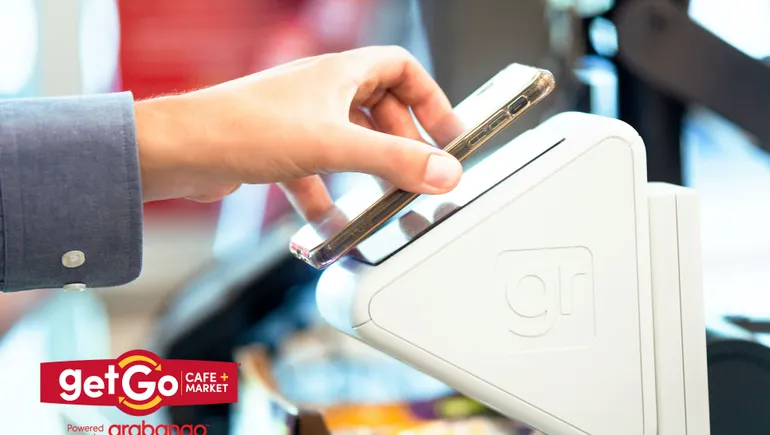
Among Standard's competitors, Grabango also advanced the commercialization of its technology this year. In September, the companymade its first commercial deploymentof its system at a Giant Eagle Get+Go convenience store in the Pittsburgh area. On November 23, Grabango added the ability for Giant Eagle customers to purchase beer using the system, according to a spokesperson for the technology company. "We are no longer a proof of concept, but a commercial product ready to expand across retailers and regions," said Andy Radlow, chief commercial officer of Grabango.

"The pandemic has heightened the urgency; eliminating lines is clearly for safety reasons. When a cashier has touched hundreds of people, customers don't have to let them touch every food item—that's truly an added benefit. So the pressure to roll out this technology is greater than ever."

Andy Radlow
Chief Commercial Officer at Grabango
Customer response to Grabango's first commercial deployment at the Giant Eagle Get+Go convenience store has exceeded expectations. Radlow said 75% of customers who tried the service used it again within 30 days, with two-thirds using it at least five times. Although Grabango's technology can record shopping patterns and send targeted promotions, the company is mainly focused on providing convenience for retailers. Radlow said: "The pandemic has heightened the urgency; eliminating lines is clearly for safety reasons. When a cashier has touched hundreds of people, customers don't have to let them touch every food item—that's truly an added benefit. So the pressure to roll out this technology is greater than ever." Grabango is working with Giant Eagle to deploy at more locations, but Radlow did not disclose a timeline. He said the technology can scale to full-size grocery stores and is currently being tested in a 40,000-square-foot supermarket in the United States operated by a "major regional player," though he declined to name it. "We are handling all user cases to bring it into commercial service." Radlow acknowledged that people once doubted whether the technology could be used beyond convenience store environments. "Some companies said 'you can't operate in places larger than small-format stores,' which is wrong... We have always designed for scale."
Grabango's efforts to bring the technology into standard supermarkets distinguish it from Standard, which is currently focused on the convenience store space. "Our current market strategy is very focused on convenience stores because we are trying to build a network of shoppers," Fisher said. "We are particularly focused on urban environments, at least for the first round of deployments." Standard plans to expand into the grocery sector in the future. Fisher said: "We are certainly in conversations with grocers because that will be our next vertical to tackle. But in terms of how quickly we can get the technology into shoppers' hands, for us it's convenience stores today, grocery stores tomorrow."

Identifying multiple items at once
Other companies have developed next-generation payment terminals where customers place items on a platform to have multiple items identified at once. These devices do not rely on in-store cameras and are easy to install, said Jack Hogan, director of strategic partnerships at Mashgin, which offers self-service computer vision checkout terminals used in airports, sports venues, and cafeterias. Hogan said his company does not require users to install a mobile app, a simple but important differentiator. In November, the company's devices recorded their 10 millionth transaction. "We believe we can capture a large share of this specific market because we are backward-compatible not only for clients but also for end users," Hogan said. "They understand the checkout concept and process; they just want no one breathing down their neck or to go at their own pace."
Smart shopping cart maker Caper also sellsstandalone checkout units that use computer vision to identify items.

Gary Budd, director of strategic planning and execution at Giant Food, said the company has long offered handheld barcode scanners that let customers skip checkout lanes, and the pandemic has increased customer interest in the technology, known as Scan It. Giant offers the service at about 120 of its 164 stores and plans to expand it to more locations. Budd said the retailer recently improved the in-store connectivity the devices require. The mid-Atlantic grocer is evaluating options to enhance its cashierless technology but has no plans beyond Scan It for now, which also allows customers to identify items with their phones. "Not many people used it before; we provided convenience. But now, because of the pandemic, usage has surged," Budd said. "I hope that over time, similar to pickup services, more and more customers will shift to the Scan It process."