
Three Key Pillars to Accelerate FedNow Adoption
Since FedNow launched in July 2023, over 900 financial institutions have signed up, but enterprise-level adoption still faces challenges in trust, efficiency, risk, and security. Ani Narayan, product lead at Modern Treasury, proposes that by strengthening infrastructure (unified directories, real-time reconciliation), standardizing interfaces (RFP experience, unified identity, QR codes), and clarifying rules (legal updates, risk attribution), the adoption of FedNow and RTP can be accelerated, benefiting businesses and consumers with more efficient instant payments.
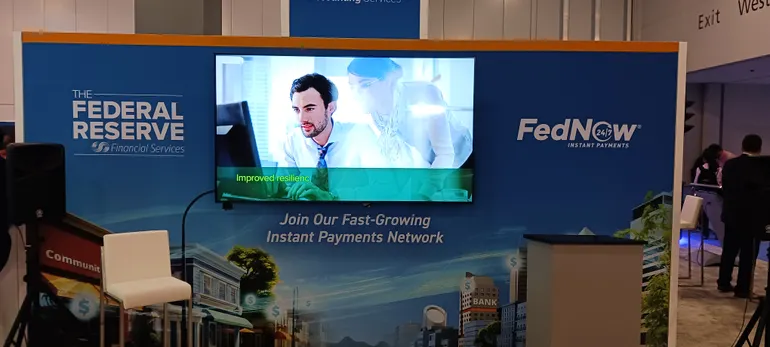
Instant payments are gaining momentum with the launch of the FedNow service a year ago (July 2023). Over 900 financial institutions have already signed up, andthousands more may follow。
This is the first new payment rail in the U.S. in forty years, and like any new payment rail such as ACH, it may take years or decades to become mainstream.
Currently, businesses have begun using FedNow or the earlier-launched RTP network for instant payments, such as accelerating broker payouts and custody settlements, which can now operate 24/7. Additionally, there is growing demand for instant micro-deposits—businesses can instantly verify new customer accounts via RTP and FedNow, enhancing the user experience.

But accelerating enterprise adoption of FedNow and RTP to make them a regular option in corporate payment toolkits still requires significant investment.
To enable large-scale enterprise adoption of instant payments, the payment ecosystem—including the Federal Reserve, banks, processors, and other participants—needs to build trust, improve efficiency, reduce risk, and enhance security around instant payments. Building frameworks around key components, including infrastructure, interfaces, and rules, will make this goal more achievable.
Infrastructure: Unified Directory and Real-Time Reconciliation
Infrastructure is the foundation provided by networks, banks, and software providers, and it should include a unified directory as a centralized system to manage eligibility and account limits, as well as a deny list to track fraud. With these, customers will have greater confidence in initiating RTP/FedNow payments and RFP (Request for Payment) requests.
RFP is a powerful feature of FedNow and RTP, supporting instant, irrevocable, and 24/7 collections. However, it currently only supports single payments requiring authorization each time. To enable recurring payment scenarios such as bill payments or payroll deductions, a debit authorization mechanism for RFP needs to be established. This could replace traditional methods like ACH debits and wire transfer debits, while addressing ACH debit fraud and reducing operational costs associated with wire transfer debits. By streamlining processes and enhancing security, businesses can save costs and optimize payment operations.
Fraud Prevention: Configurable Delays
To reduce fraud, intentional and configurable delays should be set for transactions with unidentified counterparties or those exceeding certain amounts. For example, the first payment to an unidentified counterparty could be delayed by one hour to allow cancellation if fraud is detected.
Real-Time Reconciliation and Data Visibility
Good financial management also requires real-time reconciliation and data visibility. Being able to know payment status at any time (e.g., whether it failed or succeeded) is crucial for system synchronization, cash flow management, and product decisions. Currently, banks typically only provide end-of-day or intraday reports, which is not fast enough for businesses managing instant payments.
Interfaces: Standardization and Unified Identity
Interfaces need to be standardized to ensure consistent and reliable payment experiences for businesses and consumers. Currently, user experiences for RFP are fragmented across different banking apps. Standardizing the RFP user experience for banks and merchants will drive adoption and help users learn and trust new payment behaviors.
Other interface enhancements could include: unified identity to go beyond bank account and routing numbers as the sole identifiers for payments; QR codes for face-to-face payments; and rules that provide clear guidelines and standards to manage instant payment risks.
Rules: Clear Guidelines and Legal Updates
Currently, the lack of comprehensive guidelines creates confusion and hesitation. Guidelines that clearly define responsibilities and risk allocation among banks, processors, businesses, and end users will reduce confusion and hesitation. Guidelines should provide a framework for managing fraud and losses.
Legal updates to explicitly allow payments via FedNow and RTP will also accelerate adoption. For example, in real estate, states have "good funds" laws that govern how settlement funds can be paid. These laws were often enacted long before irrevocable real-time payments existed and do not explicitly list new rails as permitted payment methods.
Instant payments will undoubtedly have a transformative impact on U.S. businesses and the financial ecosystem, as has already happened in other countries. The U.S. payments industry can accelerate this transformation by focusing on infrastructure, interfaces, and rules. Both businesses and consumers will benefit from increased payment efficiency and speed.