
Can Buy Now, Pay Later Withstand Market Tests?
During the COVID-19 pandemic, buy now, pay later (BNPL) providers expanded rapidly amid a wave of abundant capital and strong consumer spending. Now that the tide has receded, rising interest rates and inflationary pressures test the sustainability of this business model. Based on data from multiple institutions and expert opinions, this article analyzes the profitability challenges, regulatory risks, and future paths for major players such as Klarna, Afterpay, and Affirm.
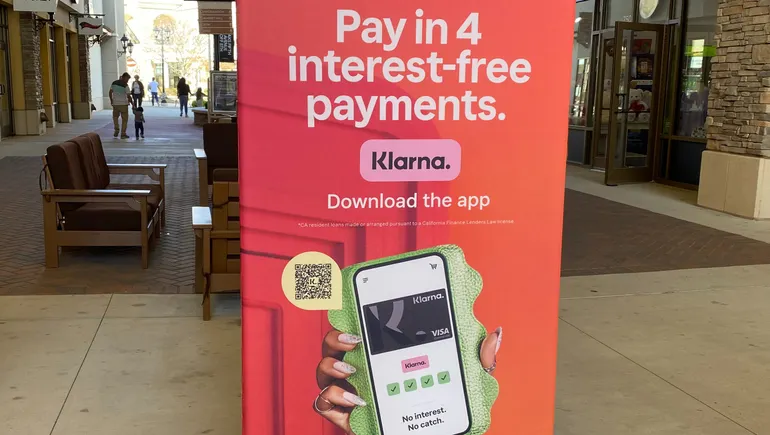
Buy now, pay later (BNPL) providers boomed during the COVID-19 pandemic, when investor funds were abundant and consumer cash was plentiful, placing the industry in the spotlight. Now that the tide has receded, BNPL companies are stranded in shallow waters, facing severe tests.
This year, soaring interest rates and persistent inflation have negatively impacted consumer spending and their ability to repay debt. For major BNPL players such as Klarna, Afterpay, and Affirm, the high-interest-rate environment has also put pressure on their business models. These companies had previously absorbed large amounts of venture capital, expanded into new markets, and hired aggressively, sustaining losses in the battle for market share. Now, venture capital has nearly dried up, and the philosophy of "growth at all costs" has been replaced by a focus on profitability.
Potential regulatory pressure has further exacerbated the industry's difficulties. The U.S. Consumer Financial Protection Bureau (CFPB) has threatened new rules. Additionally, tech giant Apple's entry has brought "ecosystem disruption," a judgment from a report released by S&P Global Market Intelligence last month. Other BNPL competitors include digital payments pioneer PayPal, as well as smaller players Zip and Sezzle.
Admittedly, consumers are increasingly using BNPL for everyday necessities, not just discretionary purchases: according to Adobe Analytics, grocery purchases in e-commerce BNPL surged 40% in the first two months of this year. However, to deliver the profits investors expect, BNPL companies have tightened credit approvals, cut staff, raised prices, and withdrawn from some markets.
As the environment changes, the BNPL business model "is indeed being questioned," said Emily Williams, assistant professor of finance at Harvard Business School. She noted: "This is quite typical in fintech booms—it starts to proliferate when the economy is good and interest rates are low, and when reality becomes somewhat harsher, it's unclear whether this business model can survive."
San Francisco-based Affirm and Swedish company Klarna are currently both unprofitable (Affirm is publicly listed and regularly discloses results, while Klarna is privately held). As for Australia's Afterpay—acquired by Square's parent company Block in 2021—its profit or loss status is unclear, but the company recorded losses before the acquisition. Its spokesperson did not respond to requests for comment on current financial conditions.
Consultants and professors say that in the current market environment, all BNPL providers face formidable challenges in achieving profitability. "The environment largely determines how things unfold," Williams said.
Growth path
The BNPL model first gained traction in European and Australian markets about a decade ago, then rose in the U.S. driven by the e-commerce surge during the pandemic. BNPL allows consumers to pay for goods or services in installments over a period of time, typically in four payments without interest.
By 2021, BNPL dollar lending volume (i.e., total gross merchandise value) surged to $24.2 billion, a tenfold increase from $2 billion in 2019. These figures come from an industry report released by the CFPB last September. Adobe Analytics data shows that total BNPL online spending last year reached $66.4 billion; as of May 31 this year, online spending completed through BNPL had reached $29.4 billion.
"Expectations for massive BNPL adoption were overly optimistic," said Matt Risley, partner at venture capital firm QED Investors. He believes young consumers adopt BNPL not because of a preference over credit cards, but because BNPL provides young shoppers with access to credit. Risley previously served as Klarna's chief credit officer and chief financial officer.
Consultants and investors point out that BNPL usage is still growing but remains a niche product. Zachary Aron, Deloitte's global and U.S. banking and capital markets payments leader, said BNPL is expected to account for about 2.2% of U.S. e-commerce transaction value this year, compared with 2% last year and 1.7% in 2021.
To expand further and fend off Apple's competition, BNPL providers are actively seeking more merchant integrations to increase visibility at checkout. Square merchants can choose to offer Afterpay services to their customers.

BNPL providers have also built direct-to-consumer connections, guiding customers to use their services at any merchant through apps or debit cards, with the goal of increasing usage frequency and expanding into physical stores.
Kevin King, vice president of credit risk and marketing strategy at LexisNexis Risk Solutions, said that since BNPL players are nearly saturated among subprime credit and younger consumer segments, they may be evaluating how to attract older consumers with better credit histories. However, long-term credit card holders may lack the necessity or motivation to switch to BNPL.
LexisNexis Risk Solutions data shows that a quarter of the U.S. population has tried BNPL, and industry growth is coming more from repeat customers than new users.
For Klarna, further growth in the U.S. (currently its largest revenue market) remains a focus, said David Sykes, the company's chief commercial officer. Klarna has 36 million customers in the U.S., with an average age of 36, and the fastest-growing generational group is baby boomers. Sykes declined to estimate Klarna's current U.S. market share.
Although Gen Z and millennial consumers remain the "primary" users of BNPL, according to a report released by Square on June 20, Afterpay order volumes among Gen X and baby boomers grew 16% and 12%, respectively, as of March. Block declined to arrange executive interviews.
Nevertheless, BNPL companies are no longer pursuing customer growth at the expense of profits. As calls for profitability grow louder, providers have had to reassess strategies, including closing operations in some markets. Affirm exited the Australian market earlier this year.
Some companies are also seeking to restructure their installment products, such as adding interest, raising interest rates on interest-bearing loans, or shifting to longer-term loans. As financing conditions have tightened, Affirm has raised the maximum annual percentage rate on its interest-bearing loans in recent months. Affirm also declined to arrange executive interviews.
Both Klarna and Affirm have conducted layoffs over the past year, and as consumer financial conditions weaken, BNPL providers have also tightened credit approvals.
King said balancing merchant loan demand with restricting credit to control BNPL losses has been a "tricky" issue in retail risk management, "but it's significantly harder for BNPL." Part of the reason is that merchants pay higher fees for BNPL transactions than the interchange fees they bear for credit card payments. King added that BNPL providers justify the higher fees on the grounds that "consumers will add more items to their carts and are more likely to complete purchases," but also because BNPL has become established as a form of credit with lower approval thresholds.
Regulatory shadow looms
BNPL's rapid growth has not escaped regulators' attention. Lawyers and professors say it is only a matter of time before the CFPB takes action to monitor these companies.
"Regulators want to understand more about this," Williams said. She and colleagues have communicated with regulators about research findings released by Harvard University last year that highlighted BNPL risks.
In its BNPL report released last September, the CFPB pointed out issues of consumer over-indebtedness and corporate data collection. The bureau said it is considering issuing "interpretive guidance" to ensure BNPL providers are held to the same standards as credit card companies. BNPL is currently not subject to the Truth in Lending Act. The CFPB has also expressed concerns about consumer disputes in BNPL transactions.
Legal professionals say CFPB guidance could involve BNPL marketing or opt-in consent, and could also relate to data monitoring. Another point of contention: BNPL data is not provided to credit reporting agencies. Affirm CEO Max Levchin said in May that his company is working with FICO to create a unique scoring model for BNPL.
The CFPB hinted this month that it plans to propose a "larger participant" rule that could strengthen oversight of large tech companies active in consumer payments, such as Apple, Google, and PayPal. The CFPB also said it plans to more broadly use the "consumer risk" provisions under the Dodd-Frank Act. Eamonn Moran, senior attorney at Norton Rose Fulbright, said the CFPB could bring BNPL companies under its regulatory scope through either of these avenues.

"The CFPB appears to be exercising its regulatory authority more broadly and forcefully than in the past," Moran said. He previously served as counsel in the CFPB's Office of Regulations. He noted that being brought under the bureau's regulatory jurisdiction could have significant implications for BNPL companies' operations and compliance management.
There is also regulatory movement at the state level: California has already addressed BNPL in its credit regulations, and states such as Massachusetts and Oregon are also considering regulating BNPL.
One possible reason the CFPB has not yet acted is that the bureau may be watching how the market contracts as more companies come under pressure.
"Right now, many players are competing for the same pool of funds in the same space, all burdened with significant overhead," said Ed deHaan, professor at Stanford Graduate School of Business. He has studied BNPL and its impact on consumers. "My gut tells me this situation is unsustainable, and we will see a certain degree of consolidation."
Focus on profitability
Daniela Hawkins, managing director at Capco, said that given regulatory concerns and lack of profitability, financial institutions have sought to create their own BNPL products rather than risk acquiring BNPL companies.

Consultants say achieving profitability will become a necessity for BNPL providers. "The market is clearly looking for something different," Sykes said. "The focus is no longer on future growth, but on current profitability."
Klarna last achieved profitability in 2018 and has committed to returning to profitability in the second half of this year. Nevertheless, its annual loss last year widened compared to 2021, reaching 10.4 billion Swedish kronor (approximately $1 billion). In the first quarter of this year, its loss halved compared to the same period last year.
As for Affirm, its spokesperson cited Levchin's comments in the May quarterly shareholder letter, stating that Affirm is committed to "responsible growth" and aims to achieve adjusted operating income profitability by the end of the fiscal year ending June 30. Affirm's net loss for fiscal 2022 widened from $441 million to $707.4 million, according to its annual filing with the U.S. Securities and Exchange Commission. The company recorded a loss of $205.7 million in the third quarter of its fiscal year ending March 31.
"They all have to revisit the fundamental question of 'how to make this business more profitable,'" King said.
In light of this, Klarna's focus has moved beyond short-term installment products: Sykes emphasized that Klarna has sought to expand its business scope beyond BNPL, such as integrating marketing services.
"When we think about the future and our value, it's not just about splitting purchases into four payments," Sykes said. "It's about how to help retail partners create new customers?"
A Block spokesperson did not respond to requests for comment on Afterpay's profitability. Block's most recent annual filing noted that before its $29 billion acquisition of Afterpay in 2021, Afterpay "historically generated net losses." According to its financial reports, Afterpay's total gross merchandise value in the first quarter grew 18% year-over-year to $5.6 billion.
Risley expects BNPL providers to eventually survive as industry pricing competition moves away from the current fierce scramble for merchant customers. As the BNPL market becomes more rational, only a smaller group of providers may ultimately remain.
"It feels like the industry is maturing, but profit margins are not ideal," Risley said.
Correction: This article has been updated to clarify Klarna's status as a privately held company.